Sunday, December 1, 2019

Blog 4 - COMM 570-001

Blog 4 Disparaging the “Other” - Bamboozling - RCG in the New Age Media

Chapter 3: Disparaging the “Other” an issue of prejudicism in race and class since colonial times where good overcomes evil, according to Wilson II and others based on Jones premise about prejudice, on his book Prejudice and Racism, “negative attitude toward a person or group based upon social comparison with one's own group as the positive reference point.” This was seen upon settlement when the Native Americans were seen as an obstacle for progress and civilization, after attempts to assimilate them through religion failed. Prejudice was also used as part of the justification for enslavement, in this case was an issue of race because the dark color was representing the opposite of the white color to their view and of class because compared to the white “wealth” they were not equal. Same concept was evident during Mexican war of independence, called by the whites as “these mixed race” or the laziest. To the Asians they call it the “yellow peril”. Disparaging the other, prejudism based on our views still is the main reason we don’t see each other as children of God, saved by the same Savior.


Chapter 4: Bamboozling an issue of racism also, a way to marginalized black people using the media to make louder their point of view, the stereotypes they have but in an amusing way. All these was done by whites with their faces painted in black. But, what about the other races? No difference in the entertainment industry the Native Americans are presented as mute, cold, to name some; the latinix are portrait as gangsters, maids, servants; the asians are portrait as good in martial arts, exotic, domestic work, women warriors, among others.  The media and its need to embrace diversity has been only to show the minorities in their stereotypical labels with room to improve in their racial and gender sensitivity. 


Chapter 5: Race, Culture, and Gender in the New Media Age as described above media has a lot to improve in this subject. In the prime TV time the minorities when part of the program are presented only in their stereotypical labels and even though some industries are working to improve these issues the growth seems to be slow and for the ones waiting for so many years is too slow, which is the reason why they made their career learning in the media industry and going through so much to launch themselves with their own TV show, their own studio to have and give the opportunity to those marginalized to be who they are and not what others had said they are. We have Oprah Winfrey, and recently Tyler Perry both with their own studio to produce programs and films that will be real and an inspiration to all.


Chapter 6: The Media where the news are presented through the eyes of the few, with the same preconceptions toward minorities. The viewer that take their word for it is fed by all those stereotyping concepts that make the acceptance of others as equal impossible a plain site. The news space historically present a 5 stages of discrimination very interesting, in the first phase called Exclousionary, in the history of the social development of these country the non-white groups were not there, they were all exclude it from the media, they are not here. The Threatening Issue phase is the second, when they are on the news but portrait as a threat to society and the country. The third one is the Confrontation Phase where the news cover a celebration of their culture in their customs or typical attire such as Chinese New Year, or cover a protest just to fuel confrontation. The fourth stage is Stereotypical Selection when the main characters posed as if we did it you can do it, too. Now, Multiracial Coverage is phase number five the one which still a dream to all, because the intend is to remove preconceptions and racism from the gatekeepers, where us really mean ‘us’ all the people. 


Current events:
This article presents how an African American built his own studio as he says there will be plenty of options for black entertainment. As history on media recalls there is a lot of room for improvement regarding diversity and inclusion on the media, but not only to include others on stereotypical roles instead in any role their talents take them too. Reason enough for Perry to build a studio that will be more inclusive at least to the African American.
Where one of the judges of America Got Talent resign due to a “toxic workplace culture” there it was racist comments and diverse attitudes that will lead her to resign. This seems to be not only toward her but also to contestants. The issue is not just what is done against others that can affect their self-worth but rather how their get bail with the argument “I am exercising my right to free speech” as we will see in the following news
  • Local Man Finds KKK Recruiting Package in His Yard, see article in 
https://www.wndu.com/content/news/Local-man-finds-KKK-recruiting-package-in-his-yard--564729891.html The man expresses he is disgusted by what this organization stands for but acknowledges that he knows freedom of speech has to be respected. In view of this, the question is, will this ever end? Because not one will win or do different because we care about others but we don’t at the same time, what matters most is my right overriding yours, if you feel threatened or if you speak up in disapproval, then “the right to free speech is up”.

Monday, November 18, 2019

Black in Latin America! Film 3.

Retrieved from: https://www.amazon.com/Black-in-Latin-America/dp/B00DKRZEN8 
Black in Latin America
By Henry Louis Gates, Jr.


In each of the countries, Dominican Republic/Haiti, Cuba, Brazil, Mexico/Peru visited by Henry Louis Gates, Jr. to compare what the country says about race vs the history and daily living of black people specifically.


1.- How was Gender/ Race/ Class represented in the film?
Race was the issue studied in this documentary. Based on historical findings on each country, interviews from diverse historians or key people. The visiting of the place to feel their daily lives. The visiting included places of interest in the history of the black slaves brought during colonial times. He also visited cities or small towns where the black resides to keep its culture, capital cities, downtowns, hotels, churches, places where their music and dance was displayed, restaurants, plantations remains, historical sites, statues depicting their heroes from independency, libraries, important black people with history to share, etc.
It was represented as an societal issue that the government and people on those countries either embrace it and paid the consequences or they denied it until it was none taken anymore by the population, or hidden to some extend, out of side out of mind type of scenario.


2.- Where these concepts encountered as issues and how were they addressed? Where this issues resolved by the end of the film?


The issue of race was the one investigated on these 4 part documentary: 
  • In Haiti the country fully embrace their african roots, through Vodou they combine their diverse african background and cultures into one. They fought for freedom of slavery and independance from French. Sadly, they never get to advance as a country. The opportunity seems to be denied and cut not just from outside, because of racism, but also from inside by despotic leaders. From the outsiders racism never got resolved, Haiti still is one of the poorer countries. Still waiting for the aid money promised to help after the earthquake. Haiti “doom” was even used as an example to any nation that want it to get freedom and slavery abolition by black.


  • In Dominican Republic the country respect their colonials and are proud of their mixed race, for them, they have many shades of brown and black skin color. Their music, merengue, represents a mixed of Spain with the guitar, Africa with the tambour, and the Dominican republic instrument; all coming together giving birth to merengue. In Dominican Republic their dark skin is called indio, maybe a way to deny the fact they are black or have some black in their blood. They claim as their mother land Spain in contrast with Haiti their other half of the island occupancy whom claim Africa as their mother land. The issue of racism was never resolved, the africans concentrated mainly in one place to preserve the culture which they called Brotherhood. Struggle for independence might created this denial, because they first proclaim independence is from Haiti, the other side of the island not from Spain. This might lead to deny anything that will attach them to the black, who were their main oppressors.


  • Cuba another country colonized by Spain who also brought a mass population of slaves, about a million, to work the sugar plantations after the “fall of Haiti”. A multirace country in which Castro on his beginnings claimed to put an end to racism. Black people in the country claim that prejudices never left. In Cuba part of their culture and embraced of African roots are through “Santeria” and the Son music, a mixed that speaks about their African and European roots. Historically in 1868 the first man of color in Cuba is a General that will fight to help on their independence “a Cuba for Cubans.” There was no difference from white or black to make independence possible; but the settlement of the US induce diverse changes among them. The separation of “white” and “black” in the army per se. When Castro takes power he promised to eliminate racism, but it was not spoken openly was just lived, in many ways the split in race led by local elite racist and the US stick around and still is a distinct differentiation, salary is lower, the cheaper currency is the one used to pay them, the work places for the darker skinned is limited. As we see it was not resolved at the end of the documentary. Cuban is just a complex multicolored country.


  • Brazil called the rainbow nation did not denied their african roots, since Portugal believe that wealth was shown by the quantity of slaves, just to Brazil they imported 5 million to work on the plantations. The africans in Brazil kept and enhance their culture by creating Capoeira a mixed of African music, martial art, and Samba, with this dance they will practice self defense, keep themselves in shape, and will hold to their roots. As in the other countries who were colonized and independent later there was a process at-rooting the African culture, but also at the end is presented as part of the freedom but even thought there was a racial democracy, institutions added the quota between 20% and 40%, still a big gap in reality when the wage still lower, the career path is limited, the opportunity for climbing the ladder is limited, and the workplace limited, too. The author, suggested that the institutionalization of the affirmative action could be a better pathway. On their mind there is hope but the road is long.

  • Retrieved from: http://cmforagile.blogspot.com 
    Mexico seems to not have any African roots, but colonial times said otherwise in this country their motherland decided to whitening the country by importing thousands of white Europeans to the point that many had no idea that “grandma was black”, when the pictures were taken and any of their grandparents were not there, one might guess the reason but they said “grandma was in the closet” because of her color. The racial categorization was erased officially. It disappear from birth, death, and marriage certificates. According to history and those interviewed they all still waiting for recognition, not even in the census African race in any way is part of the options. At the end racial categorizing vanished but not racism.


  • Peru, the Inca civilization. Historically had Lima named the black city town. African slave trading was done in Lima and it increased as the wealth of the country was exploited by their colonizers. Peruvians claim that their treatment to the African slaves was not as it was in other countries but there was different if work on the plantations or ranching, on ranching they seem equal as their master in clothing, using horses, work around the ranch and the “freedom” to mixed themselves, have children with their slaves or intermarriage. Something unique happen in Peru recently, it became the first country in Central and South America where the government made a public apology to all African descendants for their treatment since colonial times. Claiming to be a free country. But, racism is visible everywhere, even in the media through cartoons and the lack of educational advancement of those of color. The issue is not resolved but many feel hopeful because now they feel visible, their invisibility ended, now they battled for integration and connection in a multiracial heritage.


3.- How has this cinematic depiction strengthened or weakened your definitions and understanding of these constructs?


First, it brought sadness for the way things were the same, even in these countries were any visitor feel their warmth, happy, and pleasant ways. How in order to keep its roots they have to segregate to some towns and be “separated” from the rest of those who fought with them for liberty. 
Secondly, It reaffirmed in me how music and food talks about heritage louder than we can imagine. It amazed me how this Cuban woman by visiting another country, find herself questioning her heritage. Asking to self if her great or grandparents might have been black, Africans, just by the food she ate and, remember eat it before at grandmas’. I loved that part. Now I have the curiosity to find out how it was in my country, because the pattern seem very similar. This documentary brought a lot of sad memories but also a pain in my heart that I could not explain. 
I long more and more for that day when I can see you with loving eyes and a heart full of joy as I see my siblings, when tears of joy for seeing you again will flow. When we can sit at the same table and I will not try to hide or protect “my things” from you, where we could talk and have fun without jokes that will hurt you, when seeing you will be like seeing Jesus. When my biases are overthrown by love. I long for that day my brother, my sister. I long for that day! Do you?

Monday, November 4, 2019

Gendered:
Education/ Close Relationship/ Org. Comm/ Media


Chapter 8 - Gendered Education. I believe that another woman out there had heard or experience personally the sad reality of not entering the career they dream about because of their gender and maybe their class, too. On high school, after attending to the exploring career workshop I was approach by couple of professors and teachers encouraging me to take a more women conform career. I never understood that and debate about it in my mind. This class has been very informative and eye opening to the reality we live in the pass and now. 
Take a stand: What do you see as the advantages and disadvantages of single-sex schools? Would you want to attend one? Looking in retrospect it was better because the program was adapted to the learning styles and uniqueness of the gender being taught. The progress in reading, math, foreign languages, music, and other subjects were smoother. Although, some of the extracurricular activities were more “female” oriented, craft classes, sawing, painting, drawing, computer, table etiquette, etc. If this type of schools will bring the opportunity for girls and boy to be prepare for the carrier they long for and are good at it. I believe it will be a great academia advantage. The gender inequality is not experience to some extent on the school but they will face other inequalities, such class and even culture related. 
Chapter 9 - Gendered Close Relationships. As Wood (2019) concludes this chapter, “understanding how gender shapes communicative practices can help us create better friendships and romantic relationships.” When we can’t see through the eyes of our friend, regardless their gender; then we ought to express love through acceptance, open communication, and respect in agreeing to disagree after all we want to grow closer. In the section take a stand on this chapter con-rumination caught my attention because I do not have my friends to talk about something bad happening on either marriage or another friend, that is something that have to be talk or resolve with your spouse or that friend; but rather to enjoy time together catching up. I usually excuse myself when I see the con-rumination. I believe feelings are contagious and the negative one is not an exception.
Chapter 10 - Gendered Organizational Communication. Take a stand: Can you think of a reason other than discrimination why men are paid more and advance more quickly than women in careers predominantly pursued by women? For the company is sustainability and rapid growth. Reputation for the organization is another reason why a men can advance faster in a predominantly women career.
Chapter 11 - Gendered Media. Take a stand: At this point it seems like we only perceived others through the eyes of the media. We have welcome and accepted the opinion of a stranger in our private homes to the point that it had regulated the way we see each other. It has changed how I see and treat my own family. The unrealistic thought of someone has become our bias and the standard use to judge and perceive. So damaging that our girls  see themselves as not pretty or beautiful because of the constant messages of it-is-never-enough, narcissism and ephemeral standards. We need to affirm the girls in our circle and give them a “better” example of real beauty. The one that last. The beauty that Jesus cultivate and spark in the people around him. Taking care of what comes in and comes out, because it should be of a benefit of others and doing so we will be more blessed. It is not about the shape of my body. It is not about the size of any part of my body. It is not about the price of the clothes I wear. It is not about the number of likes on the pic I post. It is not about the number of comments on my post rating “my beauty”. It is about the size of my heart embracing God, myself and others.
From: Wilson II, Gutierrez, and Chao (2013). Racism, Sexism, and the Media. 4th Ed. Thousand Oaks, California:
Chapter 1 - Demographics. Discussing the reality of United States of America based on the 2010 census, stats, and projections all pointing to the same direction, a white majority nation becoming a minority nation. Minority is a term used on census for the groups that has less presence in a place. According to Wilson II, the problem is when minority become more than numbers for counting and end up being a measurement of value when not only is a small amount but also a less important group. 
It is important to know that demographics has made possible seeing the stats as an opportunity to know and become knowledgeable of other cultures and be open to accept the contributions they made and will make to the country after all they keep increasing in numbers and many of this minorities are ‘not eligible for the melting pot’ according to the white majority. 

Nevertheless, since history repeats itself there will be resistance because any country will despise to become the minority in its own territory. Reality does not blind feelings, it did not happen in 1950 with the big Irish migration and will not be any different now with the central american's migration through the Mexico border. As we have seen deportations by thousands happen and might continue, meanwhile the oppose party will try to "resolve" the problem politically speaking see the latest news article portraying the creation of a "swift, fair pathway to citizenship" for undocumented immigrants," hopefully this might be a solution, with not many limitations that will still leave too many out, that will give peace to those who came to work hard and have a better future, see full article here. it is a reality that need to be address wisely because the future depends on them, they will be the work force, more will be in influential positions.

Chapter 2 - Media Matter. This chapter can be summarize as the way of knowing people and places in which we will not be able to know first hand. Media matter because it affects all areas in our society including the economics. It shapes and it will shaped our view about anything and anyone consciously or unconsciously and at different levels depending on the viewer own preconceptions.

We must stand up and be willing to learn the ways media work on placing their views and values about a group on the rest of the population. Now regarding the shift in the majority/minority ratio it will be interesting how media will handle it, so far we see how representations of those groups appear on the media, on the big screen appearance with no relevance intervention still true. Other way that seems very usual is the use of the big screen to show the bias existent against that group.

Click here for the full article where Congressional Democrats push to revive equal rights amendment to clear the way for Virginia State to be the last to ratify, states Stolberg, 2019 in this article. The way is intended that to happen will by marking up a bill in which the deadline, in 1982, to adopt the amendment get extended now, of course it is possible that this deadline was not constitutional valid, but votes should be collected in order to make the 38 addition needed to make E.R.A a constitutional amendment. What will happen we don't know but the fight for equal rights still amendment by amendment.

Tuesday, October 22, 2019

Film 2 - Loving

Lovely - intermarriage, based on a real life life story, in 1958 

lovings.jpg.jpe


It begins in the front porch with Mildred telling Richard she is pregnant and him saying that was good. A race street happening between a white and a black man, the black man won, and immediately Richard is seen kissing Mildred in front of everyone on the race. Then they head to DC to get married. They seem living fine over her parents. He is designing the house plans for the acre bought to raise a family. Later he is told by his mom that the deputy of the town was looking for him. The next scene is with him placing his marriage certificate on the wall or their room. Later they are dining with her family, having a good time. Right after, a scene shows two police cars waiting on the outside of the house, at a safe distance. The police head over the house where the sheriff opens the door, which was unlocked but broke the door of their room asking Richard what he was doing sleeping with that woman, she says I am his wife. Richard points out to the wall where the certificate is hanging. The sheriff said to him, "this is not good for you" and took them both to the precinct for the night. In the morning, Richard is set free but not Mildred. When he asked, the police in charge told him that he has to wait until Monday and talk to the judge about it. Rich went home trying to figure all out and came with the conclusion that someone talks on them.


He's very distressed, and so is she in jail, so he goes to bail her out, but the jail keeper says he can't to what he retort; I will  get a lawyer because "it isn't right." The sheriff called him to his office "to listen to him" kind of thing but end it telling him that it is wrong what he did, but he might not know because of his dad's business working with people of color plus he having different mixed in his blood (part Cherokee, black, white, and another one), this one did not know where to call - and the sheriff keeps on showing him more about how wrong was to marry a black woman and end it up saying that it was God's law, because he made them different for a reason, using the analogy of God creating the sparrow as a sparrow and the robin as a robin, different.

Her dad bails her out, and they had to live at their parents separated. Next, they are meeting with the attorney he hires to straighten things out, but the court rule for them leaving the state for 25 yrs if they do not detract from their marriage decision; otherwise, they will have to serve a year in jail, issue immediately. They should not come into town together, or they will go back to prison. They left to live at a friend of a friend’s house in Washington, DC.

Closer to her due date, she grows sadder. When her husband asks, she said she always dream of his mom delivering their baby. So, they decide to sneak up to their parents that night. After a couple of hours, the sheriff came to take them back to court, but the lawyer lies for them to the judge saying it was unintentional because he did say it was ok for them to have the baby there. Outside, the lawyer said to them, do not come back; I won't do it again. 


Time passes, and they all seem to be doing ok with two children and one on the way.  Soon after she looks unfortunate, in the background music is playing -you don't miss water until your well runs dry- when her sister visits. Mildred is happy to see her sister and can't help but said she feels sorry for her children leaving "caged" with no green anywhere. Her friend in the house tells her to write to Bobby Kennedy because what she needed was some civil rights.

Next, the phone rings while she is doing laundry while children are playing close to her, and upon answering the phone, attorney Cohen told her that her case got their attention, and they will have it with all costs covered by the ACLU. Cohen makes all sorts of arrangements for them to meet him in town, but Richard did not seem convinced. The lawyer tries hard to explain, but Richard will not let him talk because, for him, the situation they are encountering is not right and make no sense. He wants to get back to Virginia. The lawyer explains the plan which, included an orthodox idea - getting back and get arrested. They did not accept the idea, forcing the lawyer to dig more for other ways to help.

Meanwhile, Richard seems unhappy. Time passed, and the only thing happening is an accident with one of their kids getting hurt by a car, and when Richard returns from work at night, all suitcases are packed. She made up her mind that no matter what, she will get back to the country and raise her family there. He supported her, and the next thing they all are leaving. She goes first with the kids, and then he catches up with them later. Their family has them go to a secluded place where they could live with no one knowing.


The lawyer shows up again and with him the option of a magazine wanting to follow the story. He appears to be jumpy. He wants to keep them safe. Mildred sent a letter to Cohen saying they had loose hope for all the time passing by with no answer. Immediately, Cohen calls his professor requesting help. They meet up with an expert in constitutional law to review the case. The Loving couple is asked to meet with the lawyers to go through the strategy. The new lawyer and they are amazed at how useful it is so they will rule against a state, and then it could be taken to the supreme court, which is what they need.

Meanwhile, in an interview with the magazine when Mildred is asked if she is concerned about the possibility of losing, and she said - yes, but is alright, we lose little battles but we win the big war. 

They get to the supreme court, and they decided not to be on the hearing. Especially when the lawyer told them that the State of Virginia might use the same argument in the past, when Richard ask, what it was; they answer, the children, it was unfair to bring mixed children to the world because they were considered bastards according to Virginia state.

The Loving family won the case! They returned to the acre Richard bought for them and began building their house.

Questions:
  1. How was Gender/Race/Class represented in the film?
The film issue is based on race, because the main plot is the interracial marriage of Richard a white man and Mildred a black woman, who goes to another state (DC) to get married because it was not possible on the state they reside. Later on the movie you see that the issue goes beyond the marriage, the children for being mixed were considered an issue. 
You can also see on the film a distinction on the work done by white men and by black men, black people were mostly the ones working the fields and the white middle class men were on offices, and the lower class were in construction. During the car race you could see how the whites stays in one side and the black on the other side. 
Gender is represented with clear distinction working white women were office assistants, but black women were shown as janitors and if portraits as mothers they were home raising their children and having food ready for the husband. An interesting part is depicted on the fields, black women were working on it, as well.


  1. Where this concept encountered as issues, and how were they addressed? Were the problems resolved by the end of the film?
The main issue presented in the film was resolved at the end of it when the Supreme Court ruled in favor of marriage as an inherited right and you could see their faces showing overwhelming happiness for the victory over the marriage issue. It does not make any reference to the issue of the mixed children. It also shows some protest for civil rights happening in Washington DC the news shows not just people of color but also white people during the protest. As you can see, the main issue was resolved but not all the issues presented.


  1. How has this cinematic depiction strengthened or weakened your definitions and understanding of these constructs?
It strengthened it, because we all are loved by God equally and He sees us as his inheritance, better yet as a Royal Priesthood. I am glad that someone took the opportunity to speak for the voiceless and to be the face of the faceless. We still have much to grow in regards to respect of other human beings and to seek inside ourselves and relearn how to treat each other in spite of their look, race, gender, class. This movie touched my heart, how easy is to use God said or did to justify my wrongdoings and mistreatment of others. How easy it is to deny facts and blurred it with our emotions and I think preconceptions.

Pictures of the film:
Getting arrested the first time and with their first baby pictures, retrieve from: http://www.4columns.org/als-hilton/loving 


Tuesday, October 8, 2019

Blog 2 - Verbal, Nonverbal, Becoming Gendered, +

Gendered Verbal Communication

I thought it was fascinating when the author said that language is the main way one expresses gender. It is a way to perform femininity or masculinity. Males learned to communicate in feminine modes and, so it is the same for females. Isn't that amazing! We always think that barriers in communication are a result of different backgrounds or cultures, but not still believe that the difference is part of gender singularities. Of course, when the talk is about the relationship, then the colliding interpretations are relevant, especially the following five, brought about by Wood on chapter 5:
  1. Showing support: did you know that in the male mode, support equals condescending, but not for females mode. Advice to male equals comfort; on the other hand, females see it as a feeling dismissal.
  2. Troubles talk: how many hadn't been hurt or sad when sharing personal problems with the opposite gender? Did you know that in the female language, when the other person acknowledges that others have gone through it too, it means dismissing and belittle them? And on the male language, it means respect? When is the other way around, in masculine verbal communication style sympathizing, for their problems or troubles means intruding, and being vulnerable pushes the withdrawn button? Better yet, if she sympathized with saying she understands, being there and sharing her story, means to them you are stealing the center of attention to yourself. Did you know it?
  3. The point of the story: I think on this one, we are pretty much aware of the differences. As to going to the point vs. detailed, not linear story.
  4. Relationship talk: Did you know that "talking about us" for a male communicating standpoint, means we have a problem to solve? For a female, not talking about us means the relationship is in trouble?
  5. Public speaking: is base on male communication. You should be assertive, dominant, confident, and being perceived as qualified.

What to do? One step will be to understand, validate, and respect each other's set of rules in communication and interpret them to have better communication. Putting our feelings aside and move to interpretation and growth in our interrelationships. I can only laugh, recalling my experiences on the subject matter, and can't wait to see what happens now that I know these clues or norms in communication.

    Take a stand: Can you identify connections among traditional childhood games, video games, and gendered communication patterns? Absolutely, boys will have as toys, soldiers, police cars, firefighter trucks, heroes, and video games will be sports games such as soccer or baseball. Boys are superheroes; they are strong and tough. Girls, on the other hand, will have as toys a kitchen with their cooking things, a baby doll with its stroller, a barbie, on my experience, girls did not play video games, it seems like there was nothing for them to play on it. For the girls, the tendency was to be caring, kind, and supportive; usually, they were teachers or moms. Their games were around those patterns.

Gendered Nonverbal Communication (chapter 6)


Take a stand section of chapter 6: To what extent do you think specifically gendered action figures make a difference in children's socialization? If nonverbal communication is key, and as children grow, they mimic what they see and hear from their loved ones and the media. I have seen in different cultural settings how a kid will treat others based on who they are portraying as a result of the toy they admired or like, there was a kid that was trying to be a hero, he will destroy so many things and make huge messes from his room all the way to the living room because he was saving his imaginary friend. Girls will be nice to babies when they have a baby doll but will act very emotional and spoiled when they play with barbies or will play with fancy clothes from mommy closet or princess outfits. Both will ask the other gender friends to leave because they were not suitable for the game. Go figure! 
Image result for gendered toys
Retrieve from: https://www.nbcnews.com/news/us-news/target-ditches-gendered-labels-toys-home-entertainment-n406741

Take a stand: To what extent do you think cosmetic procedures, such as liposuction and Botox injections, are different than wearing makeup or having body piercings or tattoos? The motives seem the same appearance, and the purpose is to enhance/change the appearance. It is all about the look, on my perspective, or what I think others think. The difference could be in the long run results, one could be overturned by just wiping it out, but the other does not. One could be more expensive than the other one. One is looking to cover up while the other is looking for a "permanent" change in the appearance. It is very hard in our society to see ourselves and be happy and proud of what the mirror shows, when for hours, days, and years we have let ourselves being bombarded by the media and place those as the standards in which comparison is unavoidable and our views distorted enough to look for the next thing that will fix us to be happy and feel beautiful, and that is the beginning of one thing to fix after another.


Becoming Gendered (chapter 7)


What a topic! In summary, children learn gender from their family and culture. Our gender identity is formed in the early years, according to Wood's research. Based on Freud's studies, girls identify with their mom and boys with their father if, by any chance, they do not have that figure in their home, they will shape it based on what it is not. How key it is for us to leave in a community close to family where the missing main figures can be "replaced" by their uncle, aunt, grandma, grandpa, pastor, teacher. Then, of course, media plays its role, and toys, too, as we notice in the chapter above. 
Parents, as their children grow, will play different maybe upgrade the roles. For our experiences as children unless on my end, you might wish your dad or mom treated you "equally"... when I was a girl, my dad would not let me play outside when the boys were playing because I could get hurt and because those were boys games - soccer, hide and seek, the warriors, the monsters, among others. Now the fun was when dad was at work… Sweet moments... I got to climb our mango trees and play with everyone there; it was no difference, so much fun to play outside in our backyard. I did grow up with a neighbor boy that acted a lot like a girl. I don't remember paying attention to that; we have a lot of fun playing, and that was what it mattered. I do remember how much they make fun of him, but he did not seem to care, of course, there were a lot of kids that will defend him.

Take a stand section: To what extent do your experiences confirm or challenge these as dominant media images of men today? These are referred to as the two main media characters, the aggressive and at times violent superhero, with high power weapons, who treat women with disrespect or exploits them. The other character is the opposite the slacker, the one that won't do or aspire to anything. In my experience, I have seen and interact with both extremes, and it is very sad and does not feel right at all. I don't think a man has to be aggressive, senseless, and disrespectful to be respected, to be a man, and either the other extreme. A few movies disturbed me when men were presented with a lack of intelligence and aspirations. When I reflect on it, I talk to my husband about how I felt that was not right, and I began to check my thoughts, patterns, and other emotions that I did not notice were a reaction to what I had watched that get fixed in my mind as truth. I did cry, how in the world, I saw God's most precious gift to me as less or incapable! Since I had been intentional of what I say and do is to lift the men on my life and to let them know how much I respect them just for being God's son. Follow this link for a National Geographic article https://www.nationalgeographic.com/magazine/2017/01/gender-toys-departments-piece/ 

Gendered Power and Violence (chapter 12)
It is as the author will sum it up: the many faces of gendered violence. You and I will be puzzled as to the many faces of gendered violence and how much we should be intentional in our minute's life to break the cycle and to make a better place around us and for our generations to come. 
Gender intimidation exists because of gender, sex, or sexual orientation, making someone feeling vulnerable or unsafe. There is also, Genital surgery such as vacation cutting, and gender-based murder, yes how it comes that when both sexes are exposed to regular care both flourished, but female outnumbers boys, and in other places, boys outnumber — something to think about.
Sexual harassment a plague that has been damaging work environments, the second home to almost everyone. Not just limited to Quid pro quo but as harmful as this, the hostile environment when producing and much more is impaired as a result of intimidating, offensive sexualized content or behavior as Wood & Fixmer-Oraiz expressed. Work, school, universities had been harmed by this unacceptable behavior, whether it is conscious or unconscious.
Sexual assault encompassing what we know already by alarming when becoming the highest threat to every student on a college campus. We must change the chip of how to guard ourselves in this day to day realities and how to stop the rape culture and the normalization of something that it is not normal or ok. Rape is not ok or standard in any circumstance, and no one, no one deserves or asks for it.
Intimate partner violence is another facet of the gendered violence that "came to stay" if we keep on believing the myths about it. No one should "got flowers today."

No one should "got flowers today," not a woman, not a man, not a child, no one.

So many ways to stop gendered violence, yet it seems as it just got fuel when the new trends come to light, in the end, the golden rule applies in this context, too. Take a stand and choose to make your voice stronger by acknowledging these realities and think about them, get involved in ways to help on stopping gendered violence, support those that refuse to be defeated by this type of brutality. It is a process. It stars in me and with me.

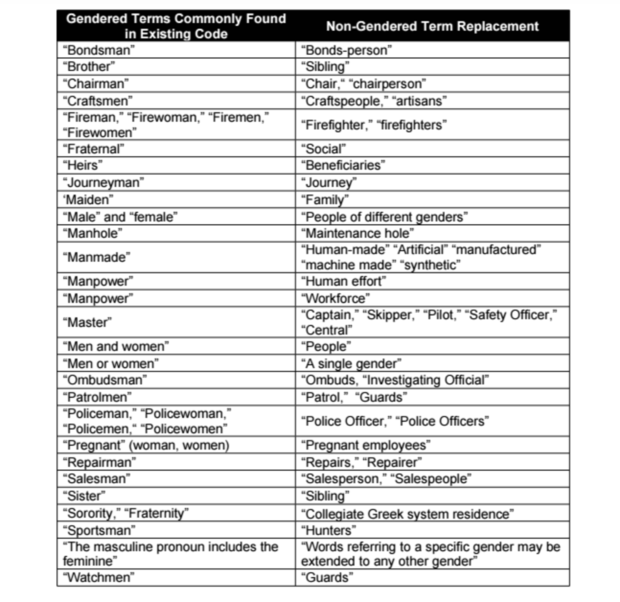
Reflections on the article "City to ban gendered language like 'manhole', 'manpower' and 'firemen'" in California click link for details. In an effort to promote inclusion replacing words and gender-oriented phrases is a start, (although we should be careful not to fall into a so vague or so neutral way of addressing someone that will give the sense of being ignored/not taking into account) but they should also make efforts to treat the underlying cause and go to the root of this complex societal issue that has over boiled after diversifying genders.
Inclusion on these terms could be like "making the road" to address the more prominent influencers in the lives of humanity and the opportunity to open dialogues and make commitments to treat and respect one another regardless. Because it is not only about gender; it is also impacting and including race, culture, society. It goes beyond the fence of who you think you are or who you think you want to be gendered speaking, because the view of other races and cultures should also be explored as consequence of changes in pro of inclusion.
If you would like to see a few of the common terms replaced see the chart below, retrieve from the same article:
screen-shot-2019-07-18-at-2-13-25-pm.png